
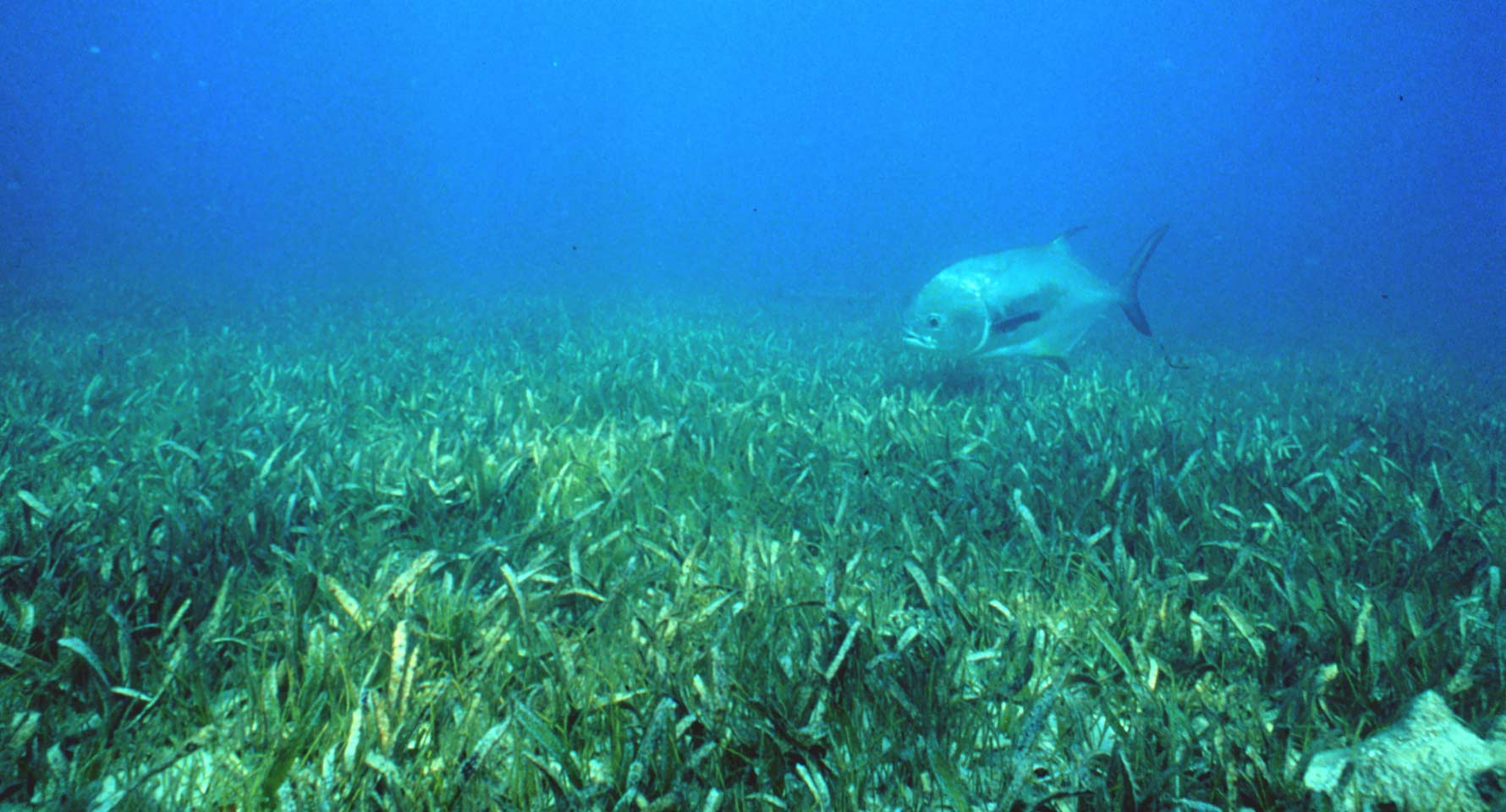
The Importance of Seagrass Meadows
Seagrass meadows are found on all continents except Antarctica. Healthy seagrass meadows are home to thousands of fish and invertebrate species, and they are one of the most biodiverse marine ecosystems. In tropical seas, seagrass meadows, mangrove forests, and coral reefs together form an ecological link where fish and invertebrates mature in seagrass meadows and mangrove forests before moving to coral reefs.
Seagrasses play a crucial role in combating climate change, as they sequester and store carbon and act as buffers against acidification. Seagrass meadows also improve water quality by filtering pollutants and bacteria from the water.
Crucial Carbon Reservoirs
Seagrasses sequester approximately 20 percent of the Earth’s carbon, even though they account for only 0.1 percent of the world’s ocean surface area. The carbon in seagrass meadows is stored in plant biomass, roots, and in organic and inorganic forms within the sediment. Seagrass meadow sediments and root systems contain few nutrients and little oxygen, which means that carbon decomposes much more slowly but is stored more efficiently within them. Seagrass meadows store 35 times more carbon than tropical rainforests, and carbon can remain bound within them for millennia. The carbon sequestration in seagrass meadows is complicated by epiphytes living on the surface of the grasses and carbon-sequestering microbes. Environmental factors affecting carbon storage are still poorly understood, especially in Indonesia, which, along with Malaysia and the Philippines, is a center of global marine biodiversity.
When seagrass meadows are destroyed, the carbon stored within them is released back into the atmosphere, accelerating climate change. The carbon sequestration capacity of seagrass meadows is weakened by various factors. For example, poor water quality is the most significant threat to seagrass meadows. Eutrophication has been shown to reduce seagrass carbon sequestration in estuaries by 100-fold. Water quality is particularly important for seagrass meadows, as they require light for photosynthesis, but the combined effect of many factors influencing their growth makes seagrass conservation challenging.
Seawater warming and eutrophication, coastal development, and increased sedimentation due to erosion from deforestation have destroyed seagrass meadows. Rising sea levels and storms also increase their stress. Other threats to seagrasses include dredging, bottom trawling, and fertilizers and pesticides washed from land. The most genetically diverse grasses will be the winners in the future.
Rapid Destruction
Globally, seagrass meadows are being destroyed at an alarming annual rate of approximately 7 percent. According to estimates, approximately 29 percent of the world’s seagrass meadows have been destroyed. Indonesia’s seagrass meadows cover approximately 30,000 km2. They are also currently declining rapidly, as approximately 30–40 percent of Indonesia’s seagrass meadows have been destroyed in recent years, mainly due to human activity.
To date, seagrass conservation has been overshadowed by coral reef conservation, even in designated marine protected areas, such as Indonesia’s second-largest marine protected area, Wakatobi Marine Park in Southeast Sulawesi, Indonesia.
Indonesia’s vast archipelago covers approximately 18,000 islands and 108,920 km of coastline. Indonesia’s marine ecosystems sustain the world’s largest marine food production. In Southeast Asia, marine food provides hundreds of millions of people with their sole source of animal protein. This has led to massive overfishing impacting coastal ecosystems and simultaneously to the destruction of seagrass meadows.
Seagrass Meadow Restoration
From the perspective of climate change mitigation, the restoration of seagrass meadows is extremely important. In this way, the carbon stored within them can be captured so that it does not return to the atmosphere, where it would further increase carbon dioxide levels. Seagrass meadow restoration is a long-term process. Planting techniques, the species to be planted, and the location where the plantings are carried out are all important considerations. Most planting projects implemented globally to date cover a small area.
Seagrasses can be planted from seedlings and seeds. Using seeds promotes the preservation of genetic diversity. If seedlings are used, they should be taken from a similar environment, close to the planting site. The quantity of seedlings and seeds may correlate with the success of the planting project, as plantings carried out over a larger area generally succeed better.
In seagrass meadow restoration projects conducted in South Sulawesi, Indonesia, the large species Enhalus acoroides was used, which grows well from seeds sown in sand. Sediment quality strongly influences the growth of seagrasses and the spread of their beds. Coarser sediment quality improves the chances of success for seagrass plantings.
Jessica Haapkylä
Marine Biologist

